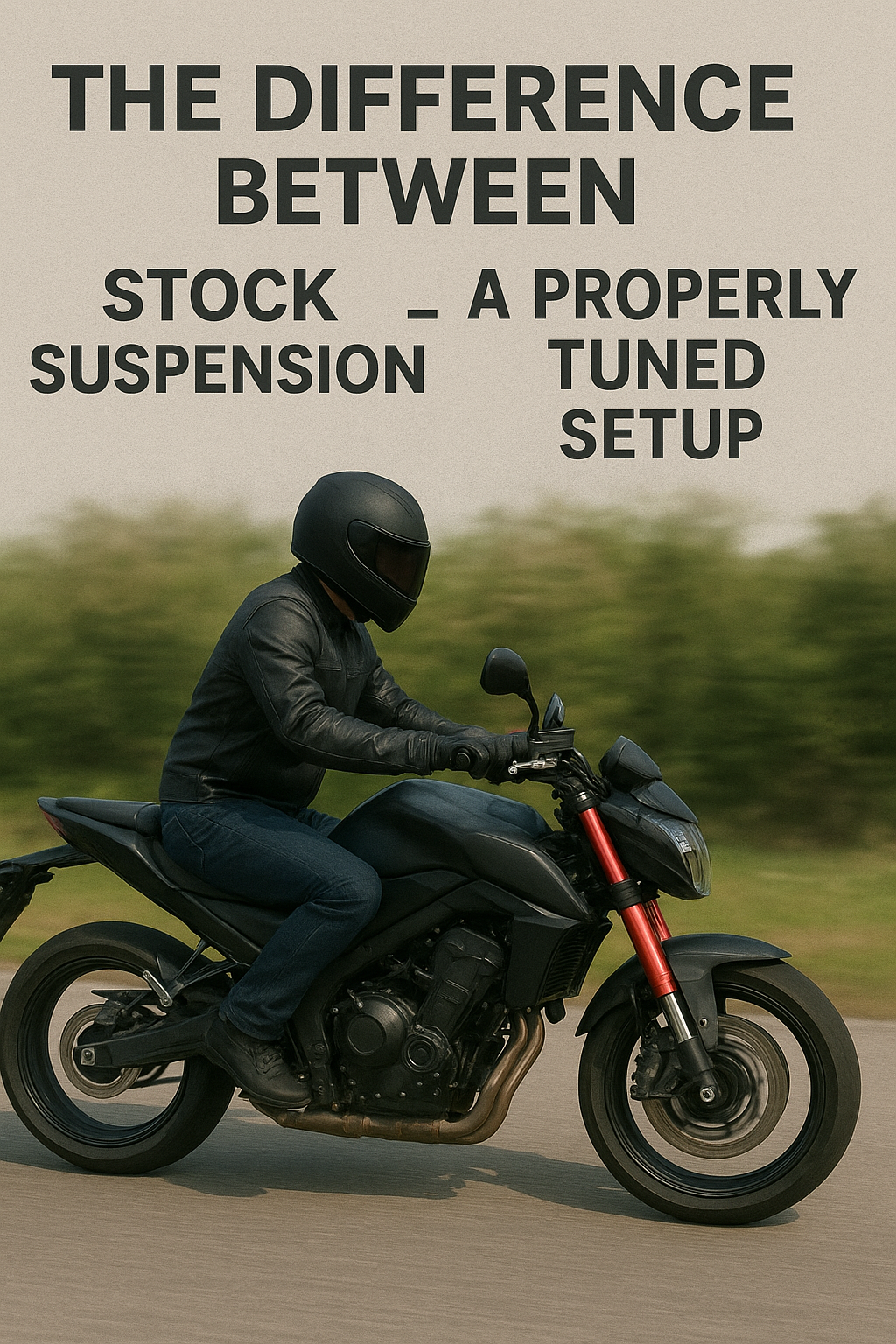
The Difference Between Stock Suspension and a Properly Tuned Setup
When you buy a new motorcycle, the suspension that comes from the factory—known as stock suspension—is designed to suit an “average” rider. Manufacturers build it to handle a wide range of riders, road conditions, and uses. While this makes sense for mass production, it rarely means that your bike’s suspension is truly optimised for you.
That’s where suspension tuning comes in. A properly tuned suspension transforms the way your motorcycle feels, improving comfort, safety, and outright performance. Let’s break down the key differences.
1. Stock Suspension – Built for the Masses
One-size-fits-all: Designed around a generic rider weight (often around 70–75 kg).
Limited adjustability: Some bikes only allow preload adjustment, with little to no fine-tuning of compression or rebound.
Compromise settings: Balances comfort and cost but can feel harsh on bumpy roads and unstable at high speeds.
Fade under stress: Lower-grade components may lose performance when pushed hard (e.g., track days, aggressive riding).
2. Properly Tuned Suspension – Built for You
Personalized setup: Adjusted for your weight, riding style, and bike use (commuting, touring, track, off-road).
Improved compliance: Allows the suspension to track over bumps and imperfections smoothly.
Better stability: Reduces wallowing, dive under braking, and squat under acceleration.
Enhanced grip: Keeps tires in consistent contact with the road, boosting traction and rider confidence.
Reduced fatigue: Less fighting the bike, more focus on the ride.
Imagine braking hard into a corner. On stock suspension, the front may dive too much, unsettling the bike. With a tuned setup, preload, compression, and rebound are dialled in so the bike stays composed—giving you more control and faster, smoother cornering.
The result? A motorcycle that feels like it was built specifically for you